There’s a number on the side of every legal e-bike in Australia, and it’s doing far more work than most people realise.
250 watts.
To be a legal bicycle rather than a motorbike, a pedal assisted e-bike needs a motor rated at 250 watts of continuous power, with assistance stopping at 25 km/h. That’s been the shape of it for years, and we wrote it up in Understanding Australia’s e-bike laws.
It’s also the number people misunderstand most, because 250 watts doesn’t tell you how much power a bike has. Two bikes with the same 250W sticker can feel completely different on the same hill with the same load.
First though, what’s changing.
Where each state is up to
Queensland moved first and hardest. A motor above 250 watts of maximum continuous rated power cannot be used on any Queensland road or path, tied directly to the European standard EN 15194. New e-device rules commenced 1 July 2026, age and licensing rules follow on 31 August 2026, and an EN 15194 labelling requirement is being phased in, with riders given until 28 February 2027. We covered what that means for owners in Queensland e-bike laws: every Tribe Bike complies.
New South Wales is different, and the difference matters. NSW changed its definition in March 2026 and currently permits up to 500 watts, with throttle-only assistance cutting out at 6 km/h. But that won’t last: from 1 March 2029 NSW drops to 250 watts and will only allow EN 15194 certified e-bikes.
Choose a bike that meets European Standard EN 15194 – it’s legal to ride now and in the future.
Transport for NSW, advice to buyers
South Australia and Victoria are running their own reviews. Neither has landed, but with Queensland already citing EN 15194, NSW legislating it for 2029, and the states and the Commonwealth working towards one national position rather than eight, we’d be surprised if they end up anywhere else.
Then there’s a second set of rules
Everything above is road rules: what you may ride. Running alongside it, written by different people for different reasons, is a second set governing what shops may sell.
E-bikes and batteries sold in NSW already carry point of sale requirements and must be certified before sale, generally against EN 15194. Which sounds like the road safety problem solved at the checkout, except those rules were drafted around battery and fire safety, after a run of lithium battery fires, by consumer protection people rather than transport people. Recent changes have folded some road safety in, but it’s still two jobs being done by rules designed for one.
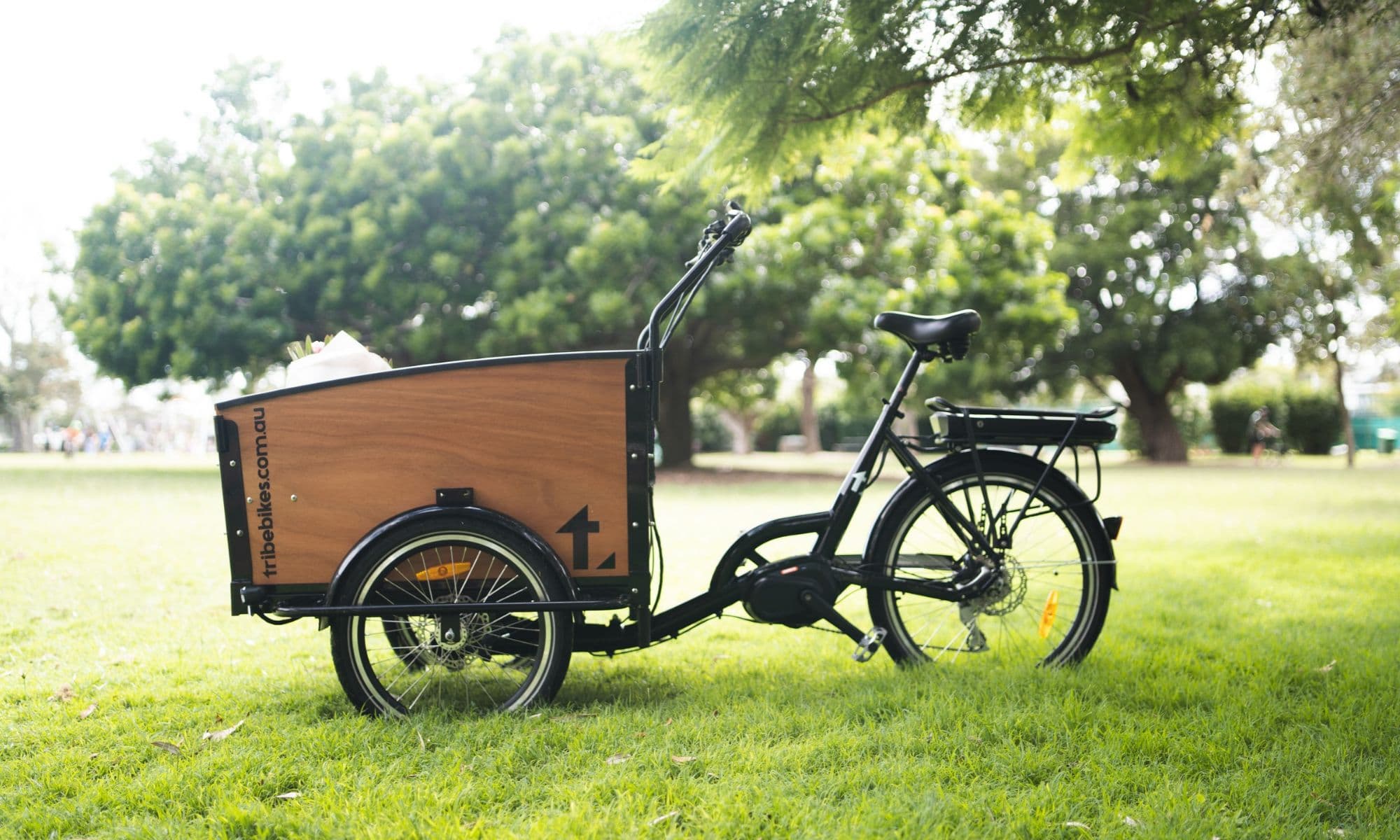
You can see the seams. NSW Fair Trading’s definition of an e-bike requires two wheels. Our three wheelers are tested to EN 15194 exactly like the rest of the range, but they can’t be certified in NSW, because the scheme doesn’t cover trikes. The result is upside down: the bikes outside the definition can be sold with no certification at all, and are perfectly legal to ride.
We tested ours to the standard anyway. It seemed like the obvious thing to do.
Confused yet? So were we. Between eight road authorities, a federal regulator and a consumer protection scheme that counts wheels, nobody has made this simple for anybody.
Which is why the ACCC is involved
While the states work on road rules, the ACCC is building nationally consistent rules at the point of sale, designed for this job from the start. Funded in May 2026 and underway since June, with e-bike safety named the first priority. Nothing has been proposed yet; consultation is expected to open in late 2026.
Its framing matches what the states are seeing: compliant means “up to 250 W, with a maximum power-assisted speed limit of 25 km/h”, and the targets are devices with “motors upwards of 1000 W” and “high-capacity, low-quality and unbranded” lithium batteries.
We think that’s the right end of the problem to start at. These bikes were always more of a retail problem than a road rules one. Enforcing at the roadside catches the rider, who usually had no idea, while enforcing at the checkout catches the seller, who did.
The sharpest version of that is the disclaimer. More and more of these bikes are sold “for private property use only” while every photograph in the listing shows somebody riding in traffic, on a bike with lights, mudguards and a pannier rack. That line is there to shift the risk. The seller gets to keep selling a bike nobody can legally ride to work, and the buyer carries the consequence of riding it there. Most people never read it, and wouldn’t know what it meant if they did.
We’d like to see the ACCC close that gap. Somebody spending thousands on what looks like, and is marketed as, a commuter bike shouldn’t be finding out at the roadside that they bought an unregistered motor vehicle.
Watts don’t measure push
Watts measure electrical input. A rating tells you roughly how much power a motor can draw continuously without cooking itself, and nothing at all about how much of that turns into forward motion up a hill with two kids and a week of shopping on the back.
What you feel is torque at the rear wheel, and that depends enormously on where the motor sits. A rough rule of thumb from our own riding: it takes something like a 750W hub motor to produce the shove of a 250W mid drive. That’s three times the number on the sticker for the same feeling at the pedals.
The reason comes down to gearing. A hub motor lives in the wheel, bolted to the thing it’s turning at a fixed ratio, forever. Hit a steep pinch and your wheel speed drops, so the motor’s speed drops with it, down into the part of its range where it’s least effective. It draws more current, produces less useful torque, and turns the difference into heat.
A mid drive sits at the cranks and drives through the bike’s own gears, so when you change down for a climb you’re gearing the motor down along with yourself. It’s the same reason your car has a gearbox rather than the engine bolted straight to the axle.
So it climbs, because it keeps making torque at the low wheel speeds where a loaded cargo bike spends most of its life. It also goes further, because a motor held in its efficient range puts more of the battery into movement and less into waste heat. A hub motor bogged down on a hill is burning range to warm up its own casing, and over a week of school runs that adds up to kilometres you didn’t have to charge for.
So a mid drive isn’t about sneaking extra power past the rules. It just needs less of it in the first place, which is why we’ve never gone near the 500 watts NSW currently allows.
“Continuous” is the word that matters
Every rule above specifies continuous rated power, meaning what a motor can sustain all day without overheating. It’s deliberately not a peak figure.
Every electric motor can exceed its rating briefly. Pull away from the lights on a loaded bike and it’ll draw more than 250W for a few seconds before settling back, which is normal and perfectly legal. So “my bike felt like more than 250 watts” doesn’t prove much. It felt like more because for a moment it was, and because a mid drive was multiplying it through your gears.
The second number: EN 15194
EN 15194 is the European standard for electrically power assisted cycles, and it’s become the backbone of Australian regulation. Nobody’s going to write an Australian standard from scratch when a good one already exists and half the country is using it.
The wattage limit is in the rules, and EN 15194 testing is how a bike proves it meets them.
Testing covers the electrical system, electromagnetic compatibility, mechanical strength and fatigue of the frame and components, the behaviour of the cut off at 25 km/h, and measurement of continuous rated power under controlled conditions. It’s the difference between a manufacturer claiming 250 watts and a laboratory confirming it.
Every Tribe Bike has been tested to EN 15194.
What this means for you
If you’re riding a Tribe then nothing changes. They’re built to 250 watts and tested against the standard, which makes them legal in Queensland today, legal in NSW today, and still legal in NSW in 2029 when the limit drops to where ours has always been.
If you’re shopping, a bike sold in NSW today at 400 or 500 watts is a bike with an expiry date on it. You don’t need to track four state reviews, a federal consultation and a 2029 deadline to avoid that. Buy to the standard they’re all heading towards, and you’re covered wherever you ride and whatever they decide.
And look past the wattage. Ask where the motor sits. On a hill with a load, a 250W mid drive isn’t the compromise it looks like on paper.
Explore the rangeSources
- ACCC Product Safety, E-bikes, e-scooters and other e-micromobility devices
- Transport for NSW, E-bikes
- Queensland Government, E-bike rules in Queensland
- Queensland Government StreetSmarts, Legal vs illegal e-devices