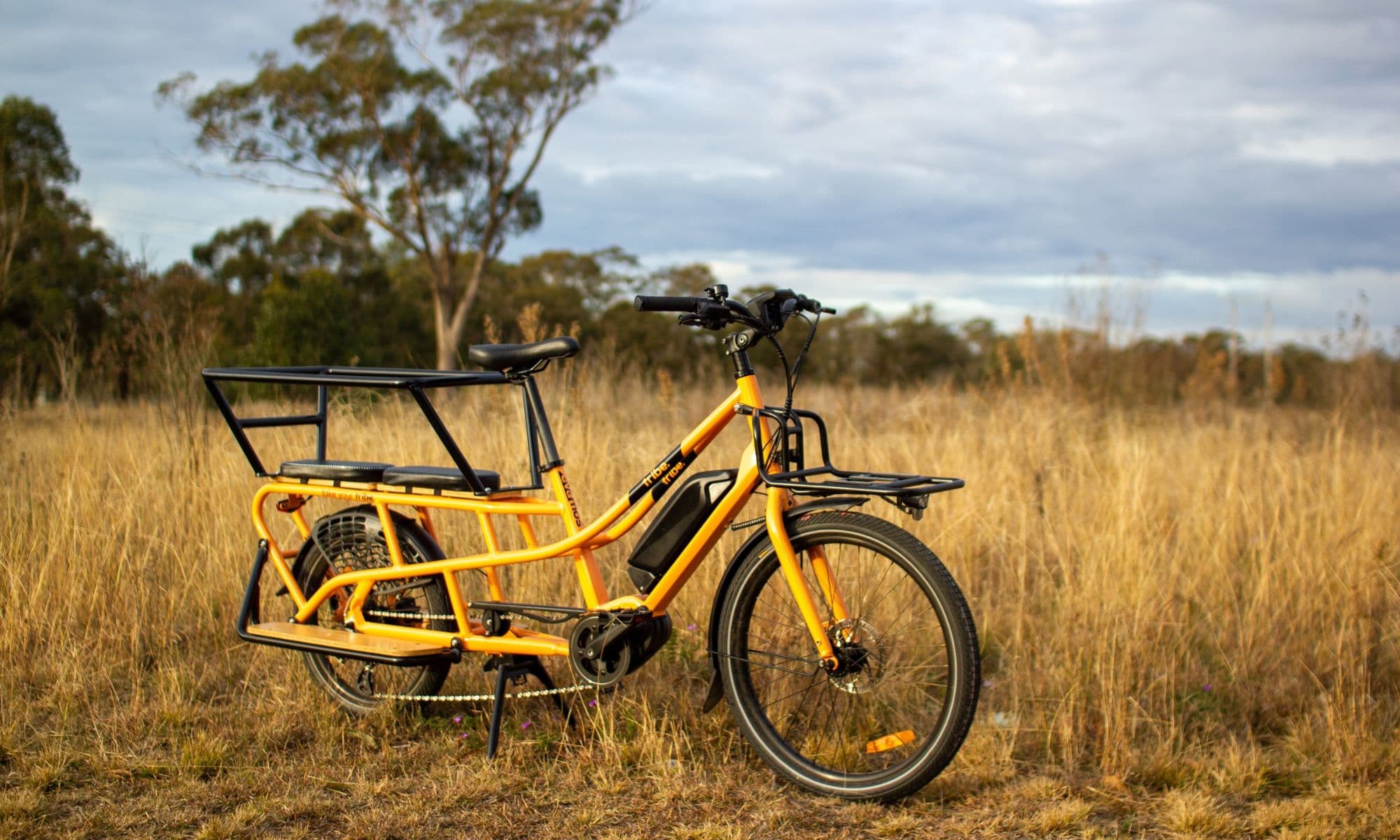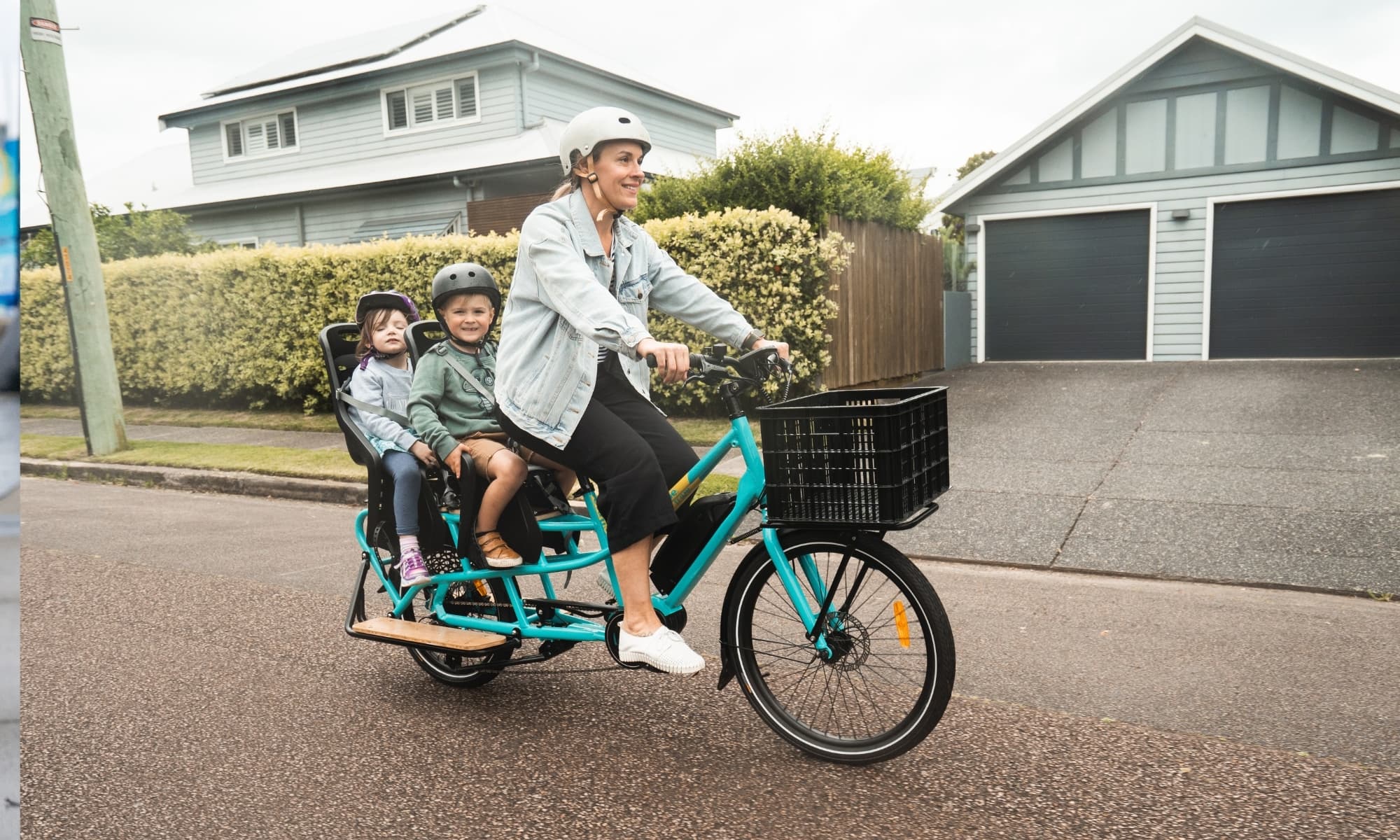
We usually talk about the Evamos as a bike for one or two kids. That’s the sweet spot: comfortable, quick to load, and it still handles like a bike. But families grow, and one of the questions we get asked most is whether you can fit three on it.
You can, as long as you’ve got the right setup and you’re prepared for the bike to feel a bit different, so here’s what we tell families who ask.
Why we normally say one or two
The deck was designed around two kids and a rider, and that’s the layout we recommend for everyday use because it keeps the kids comfortable and the bike predictable. A third kid uses every centimetre of the bench and changes how the bike takes off, corners and stops. None of that’s a deal-breaker, but it’s something to ease into rather than discover halfway through a school run.
The setup: three across the back
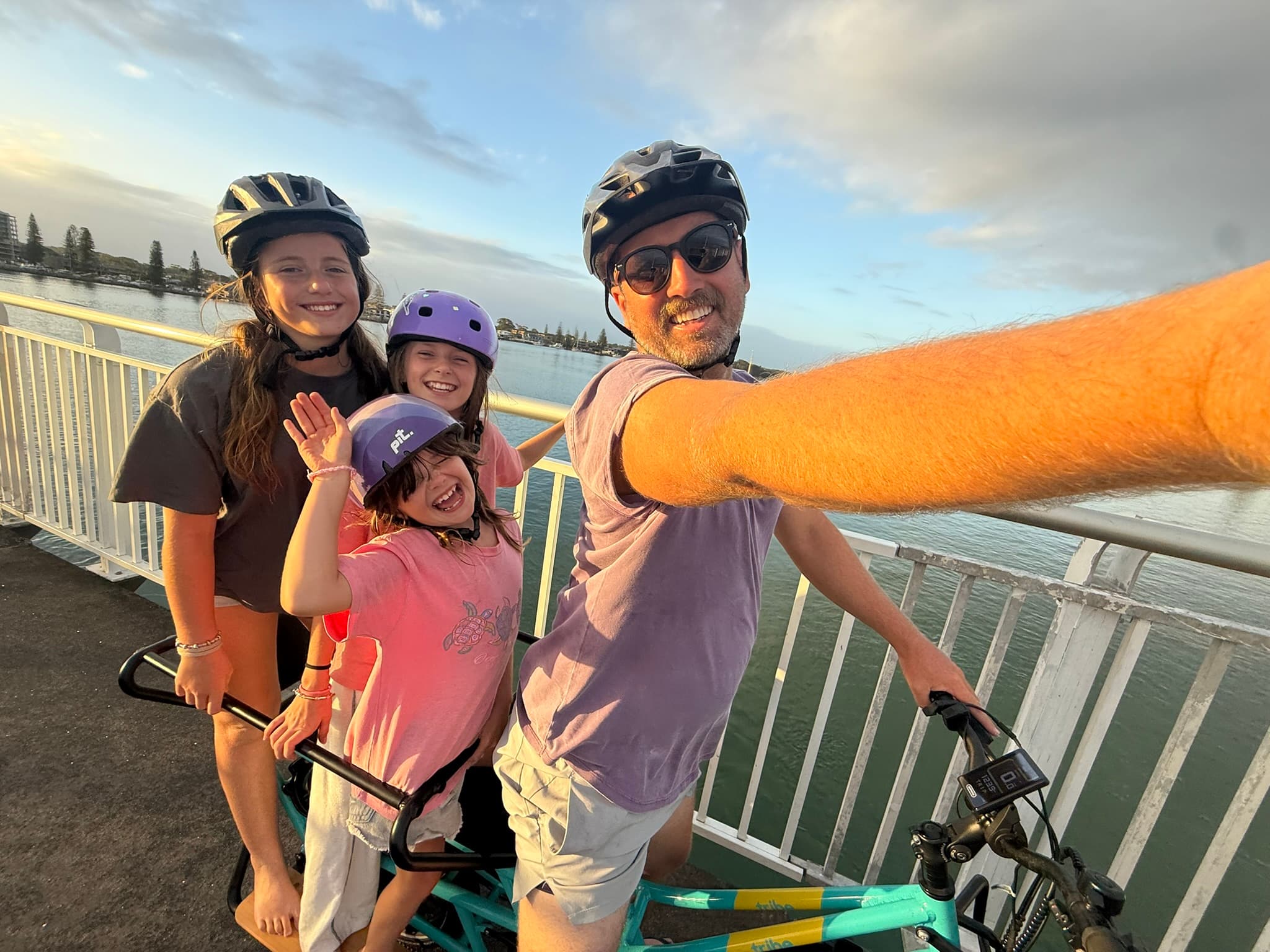
All three kids ride on the rear deck in a row. Each seat pad is 34cm long, so the two together give you about 70cm of bench, which only works because kids don’t mind squashing up. The kid at the back leans into the padded backrest, the middle one nests in against them, and the front one climbs on last and sits at the front edge with their feet in the footrests and hands on the side rails.
It suits smaller kids, around 25kg each or less, which in practice means under about eight. A big eight-year-old runs out of bench before the bike runs out of weight limit, while a toddler plus two school-age kids fits with room to spare. Below are three 9 year olds, now 10 who regularly squash in particularly when there’s wrestling to be watched!

What changes with three on board
The weight adds up fast. The Evamos is rated for a combined load of 200kg including the rider. Three kids at 60kg between them plus a 100kg rider is 160kg, which is comfortably inside it, but bigger kids or a bigger rider close that gap sooner than you’d think. It’s worth doing the sum before your first ride.
It corners differently. With that much weight over the back wheel the bike won’t flick through bends the way it does with one kid on. Take wider lines, and start braking a bit earlier than you normally would.
Take-offs are slower. From a stop, especially uphill, the motor has more work to do, so take off with confidence and get up to speed as quickly as you can.

Tips we’ve picked up
- Load back to front. The back-seat kid goes up first and wedges into the backrest, then the middle kid, then the front kid last. Done in that order, nobody gets knocked off the bench while you’re still buckling up.
- Always load on the centre stand. The double-leg kickstand is the only thing that’ll hold the bike steady with 60kg of wriggling passengers climbing on.
- Pick your assist before you push off. Eco’s fine when you’re on your own, but with three aboard you’ll want Tour or Sport from the first pedal stroke, applied smoothly so you get the push without the lurch.
- Tell the kids the rules. The kid at the back holds the backrest, the other two hold the side rails, and nobody leans out when you put a foot down at the lights. It only takes a few seconds before each ride.
- Find an empty street first. Ten quiet minutes with all three on board is a much better place to find the balance point than a red light on the school run.
Who this setup suits
It mostly suits families in transition. You had two kids, now you’ve got three, and you don’t want to give up the school-run bike over one extra passenger. Three across gets you through the year or two until the oldest is riding alongside on their own bike.
It also suits short trips better than long ones. Two kilometres of bike path is a very different job to a 15km commute, so if your daily loop is short and mostly away from traffic, three works well.
And it suits riders who already know the bike. If the Evamos feels natural with one or two kids, adding a third is a small step, but if you’re still finding your balance with one, wait a while before trying three.
Is it for you?
Three kids on an Evamos isn’t the official line, and it’s not what we’d suggest to a family buying their first cargo bike. But plenty of families do it, and we’d rather tell you how to do it properly.
If you’re weighing it up and want to talk through your own numbers (kids’ ages and weights, where you ride, which seats), drop us an email and we’ll help you work it out.