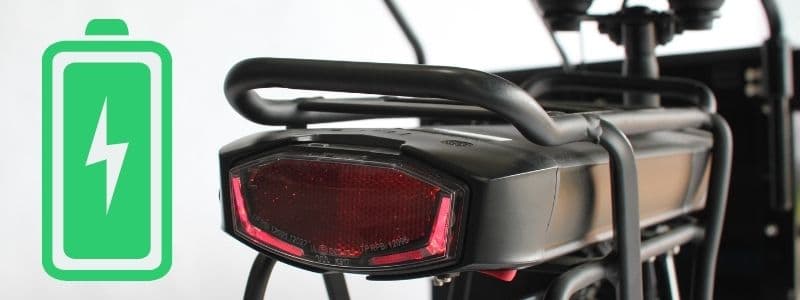
We’ve previously covered how to understand an e-bike’s power, where the preferred method of calculation is to use torque. However to get power, there’s a critical piece of the puzzle still to solve, that being the battery that supplies the power. Today we take a brief look at how to understand the battery capacity of an e-bike.
How far will the battery get me? How long is a piece of string?
One of the most common questions we get asked about our bikes is how long a battery charge will last.
This is impossible to answer, there’s so many variables at play. Think of your car and the economy you get out of a tank of fuel. Driving around the city the fuel economy is poor, although if only taking short trips your tank of fuel might last a long time. If you’re driving on the highway your fuel economy might be great, but you might be filling up more often. Add some weight, (eg towing a caravan) and fuel economy falls through the floor.
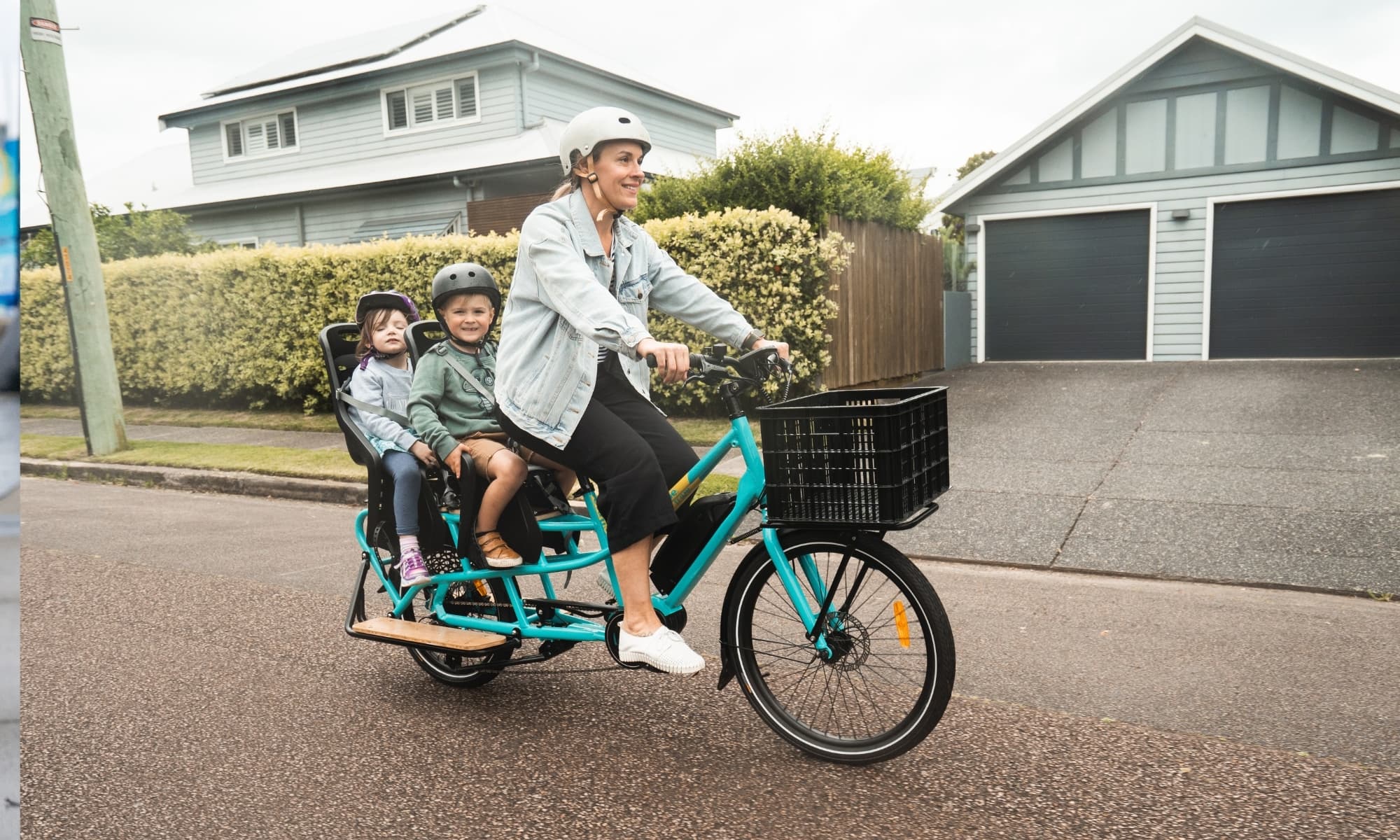
The same thing applies for e-bikes. Range depends on how long the trips are that you are taking, how much you are relying on the electric assist, how many hills you’re climbing and how much weight you are carrying.
One rider who conservatively uses their electric assist over flat riding, not carrying a lot of weight may get 50km from a charge on their Tribe Bike. A rider who cranks it up to the top level and rides up and down hills all day with a huge weight in the bike may only get 20km.
Battery life depends on Amps being drawn by the motor
When we discussed e-bike power, we touched on the relationship between amps and volts. Volts can be considered like the lanes on a freeway, with more volts being a wider lane freeway, with Amps being the amount of electrical energy.
It’s this electrical energy, or amps that determine how fast a battery is drained. As a result it’s common to measure battery capacity in Amp Hours (abbreviated to Ah), this being the amount of hours it would take to drain the battery if 1 amp was constantly drawn.
A 250 watt e-bike motor may draw up to 15amps of energy. Therefore in theory at maximum output, a 15Amp Hour battery would be drained in an hour. However, e-bike motors are programmed to only pull that sort of energy for short bursts only, both in order to comply with the Australian e-bike rules and in order to avoid burning out the motor). Typically they’ll be drawing 2-6 amps, in fact to meet the Australian standards of 250 watts, a 36v motor can only be rated to draw roughly 7 amps of continuous power (remembering volts x amps = watts).
What about Watt Hours?
There was a time in e-bike land that Amp Hours were the measurement of choice for battery capacity, but for some reason or another more and more e-bikes are promoted with Watt Hours (Wh) as the unit of measurement. This may be because of the rise of electric vehicles which tend to use Watt Hours, or may just because Watt hours is a bigger number, so makes capacity sound bigger!
The good news is that Watt Hours and Amp Hours can be easily converted to each other.
Watt hours = Amp Hours x Volts
Amp hours = Watt Hours / Volts
So a 13 amp hour battery on a 36v motor has 468 Watt Hour capacity.
Electric Vehicles use Kilowatt Hours (kWh) as their unit of measurement for battery capacity. One kWh is simply 1000Wh. Given their much larger size, it makes sense to do it this way. A Tesla has a 100kWh battery, so roughly 200 e-bike batteries!
Tribe Bike Battery Capacity
We hope the above helps to explain battery capacity a little better.
Most e-bikes have batteries from 10-20Ah (360-720Wh).
Batteries are one of the most expensive parts of e-bikes, and the global electric car boom and shortage of lithium and other key battery components means prices aren’t coming down as many forecasted they would 5-10 years ago.
The Tribe Original is equipped with a 13Ah battery. We found that to be the sweet spot for the sort of riding most of our customers are doing. There’s no point paying for a whopping 20Ah battery when most adventures are only 10-20km. We’ve found for most riders anywhere from 30-50km can be expected from a single charge.
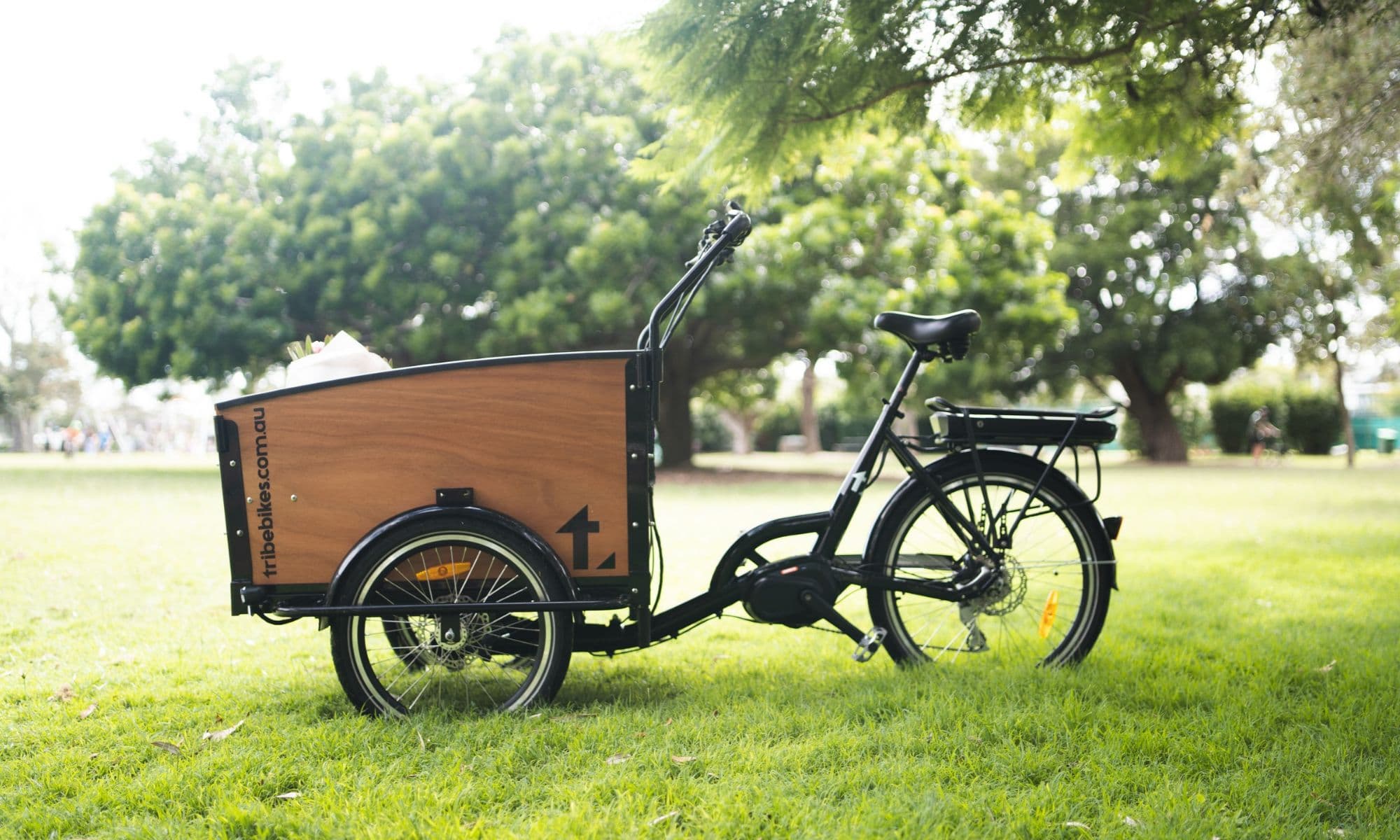
The great thing with the Tribe Original is that if you are doing longer rides it’s really easy to carry a spare battery in your cargo box, and swap it out mid ride, so a massive capacity battery simply isn’t necessary.
One other thing to note on batteries is that it’s really important to stick with cells from known providers such as LG, Samsung and Panasonic. Cheaper no-name batteries will perform poorly and are greater risk of catching on fire! We always stick to batteries from the above 3 brands, depending on supply we may use any one of the three, but have found performance between all three is comparable.