It’s a question we’ve been asked plenty of times now, so it deserves a proper answer. How safe is it really to cargo bike with kids?
Safety comes down to the design of the bike itself. See how each cargo bike we make carries its riders, or read our guide to the different styles: two wheels against three, frame geometry, brakes and load limits.
It’s a reasonable thing to ask. When you load your precious cargo into something with no car seats, no airbags and no crumple zones you can feel exposed, particularly when the safety features of cars have been drilled into all of us our whole lives. For the record we feel perfectly safe cargo biking with our kids, and these are the reasons why.
You’ll be seen
One of the biggest causes of accidents between cars and bikes is that the rider simply isn’t seen. Drivers are conditioned to look for cars in that split second blind spot or intersection check, and they can look straight past somebody on a bike. Commuting for years on Sydney’s busy roads I had more than one close call, and in every case the driver said the same thing afterwards: I didn’t see you.
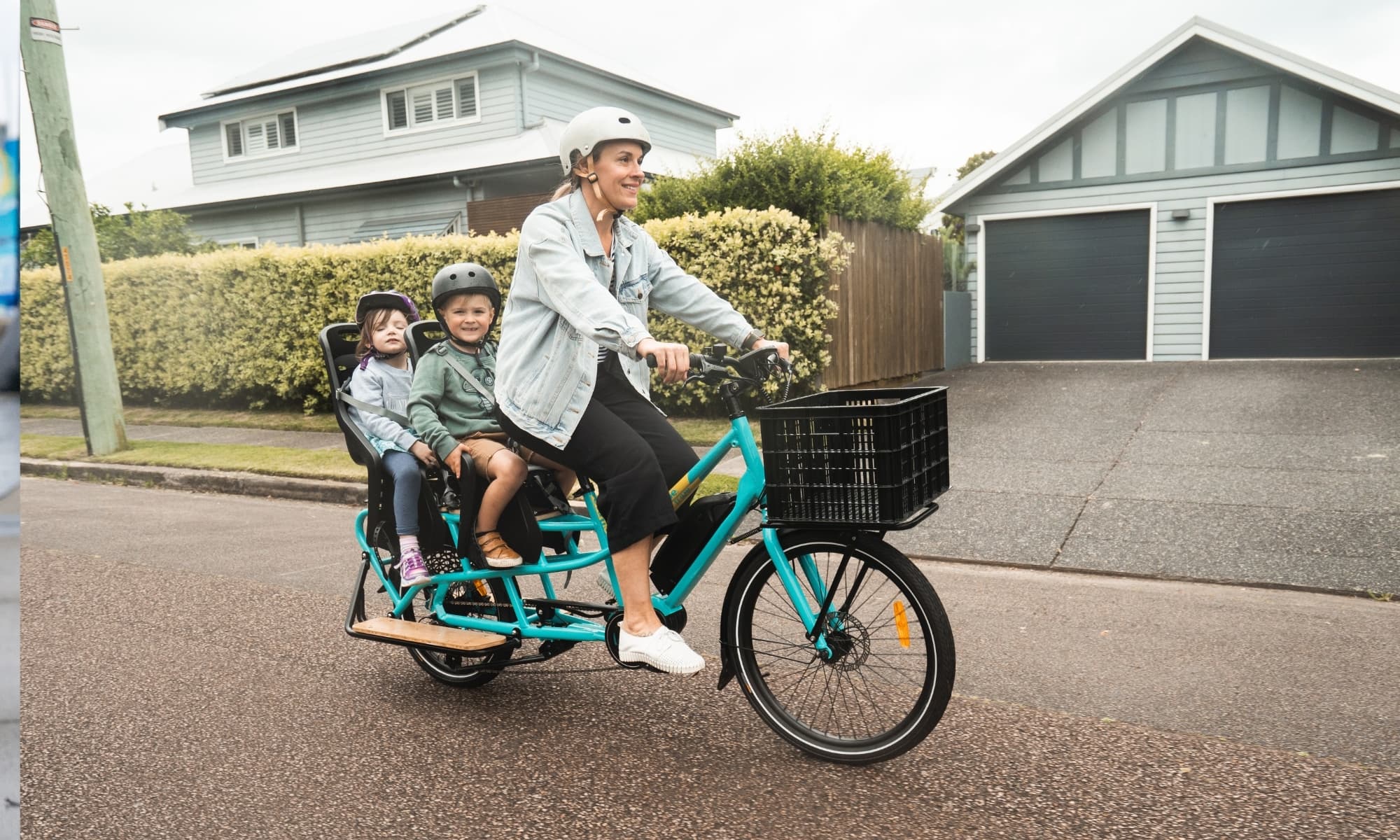
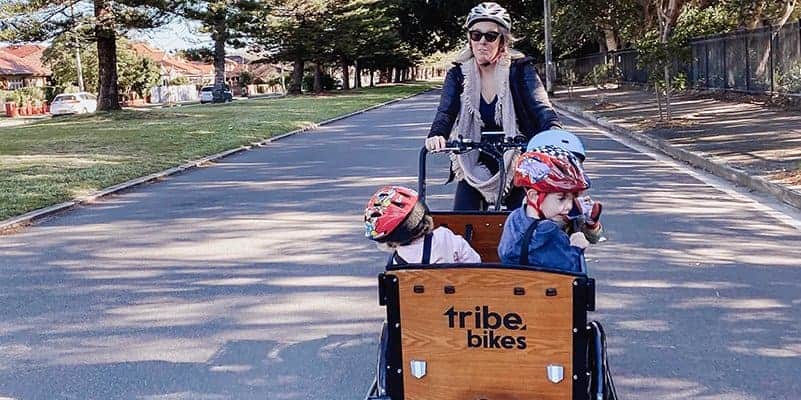
I’ve never had that feeling on a cargo bike, because a cargo bike is hard to miss. Whether you’re sitting bolt upright behind a big box or stretched out along a metre of loaded rear deck, you take up the sort of road space a driver’s eye is already hunting for, and the shape is unusual enough that people look twice. Plenty of times I’ve watched a driver do a double take and then offer a smile and a wave as they go past. Once they notice kids on board they give you room, and that’s the point where the whole thing stops feeling vulnerable.
Occasionally I’ll take out one of my other bikes with a rear child carrier and I feel exposed again straight away. Drivers roll through roundabouts without seeing me and doors open in front of me, on the exact same roads I ride comfortably on the cargo bike. The difference is remarkable.
Being seen still takes common sense, so wear something bright and use your lights at dusk and after dark. Always assume cars haven’t seen you, then be pleasantly surprised when they have.
Most injuries to kids happen standing still
A 2016 Australian study into children injured on bikes found the biggest single cause had nothing to do with roads, traffic or cars at all. It was the bike being stationary.
An ordinary bike with a child seat bolted on has nothing holding it up while you load it. We’ve done it ourselves: lean the bike against a post, get the first one harnessed in, and a gust of wind puts the whole lot over while they’re strapped down and helpless. We got away with a ruined ride rather than a trip to hospital, but it could easily have gone worse.
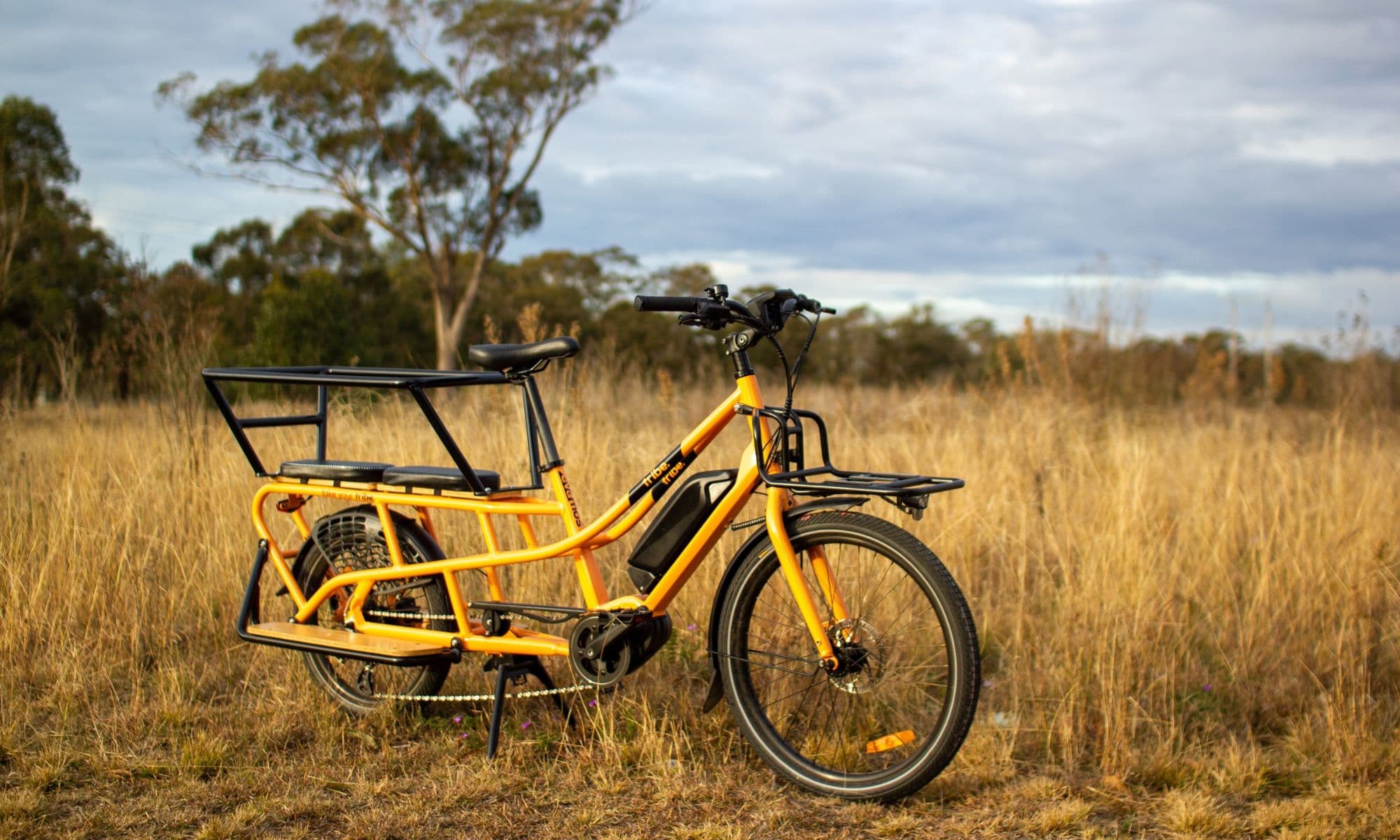
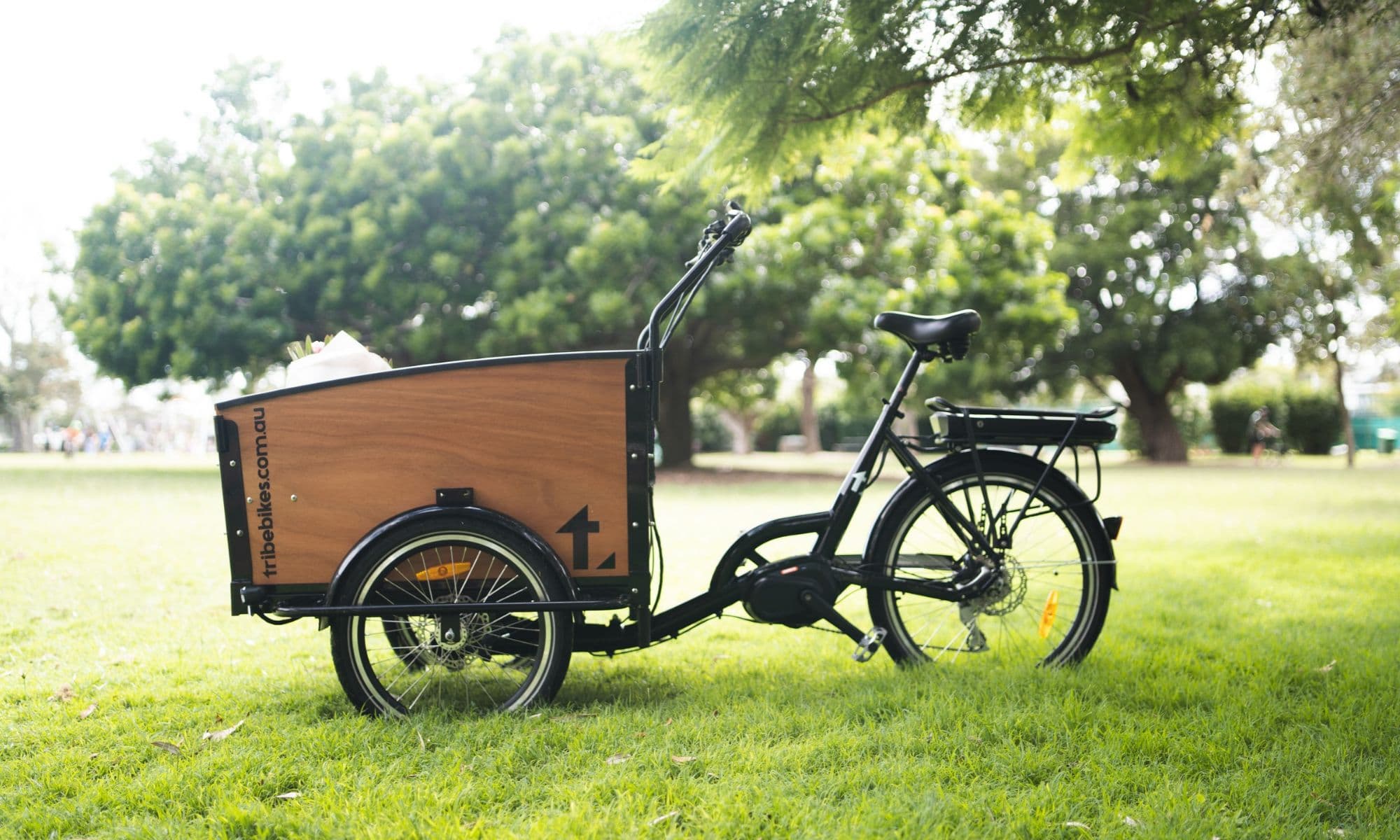
Every bike we make deals with that, in one of two ways. The Tribe Original and the Ricky Rickshaw have a third wheel and a parking brake built into the handlebar, so you squeeze the brake on and load them in with nothing balancing on anything. The Evamos is a longtail, and it has a double-leg centre stand that lifts the rear wheel and holds the bike dead upright under sixty kilos of wriggling passengers. Load on the centre stand, every time.
The three wheelers still have the edge on the unplanned stop. Somebody drops a banana halfway up the street and you squeeze the brake, sort it out and go, with nothing to deploy and no wall to lean against. On the Evamos you put the stand down first. Both are a long way from balancing a loaded bike against a fence and hoping.
More stability if something does happen
One of the most common cycling accidents is being doored, where somebody parks, opens up without checking the mirror, and puts the door into the path of an oncoming bike. It’s a horrible experience and it often ends with the rider going over the handlebars.
Bikes are entitled to take the lane, and staying out of the door zone is how you avoid it altogether. But if it did happen I’d far rather be behind seventy kilos of steel three wheeler than on my lightweight road bike. I’d hate to test the theory, though I suspect the car door would come off worse.
The Evamos sits between the two. It’s a good deal more planted than a road bike and a good deal lighter than the Original, and that is the trade you’re making when you choose it.
You skip the last hundred metres
By far the most stressful part of getting kids around by car, other than the running commentary from the back seat, is the moment you park and have to get everybody out and safely to the door. For us that meant telling a four year old to stay still on the footpath while we wrestled the two year old out of a car seat, holding our breath the whole time that the four year old didn’t step onto the road. We’ve had more than one close call and we suspect most parents can picture it exactly.
On a bike you just arrive. We ride to the park and pull up beside the swings, ride to the beach and pull up beside the sand, and at the shops we lock to the nearest pole. Getting kids off a bike is quicker and calmer than unclipping two car seats on opposite sides of a car in a busy car park.
It’s easy to feel safe on a cargo bike
Whatever you’re riding, the safest way to do it is defensively, and you should always assume you haven’t been seen. But between the two of us we’ve now had mum, dad, grandma and grandpa on these bikes over several years and nobody has felt unsafe on one yet.
Common sense still applies. If you can take the back street instead of the busy road the ride will be more pleasant anyway, and rather than trying to win your tour de suburb, take things a bit easier, take your tribe and enjoy the ride!